Coinage History: Types, Weights and Metal Value
The great coins of history — from the first electrum of Lydia through ancient Greece, Rome and Byzantium to the gold trade coins of the Middle Ages and the modern sovereign — with their main types, typical weights, and the current value of the precious metal they contain, based on the live gold and silver price (updated every 15 minutes).
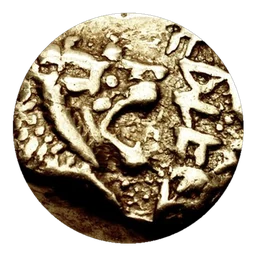
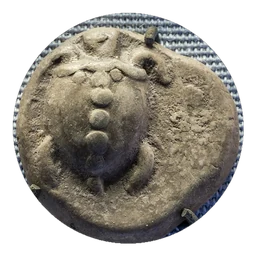
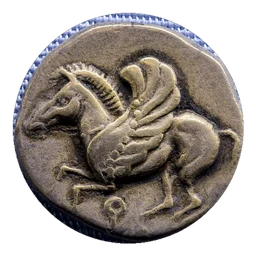
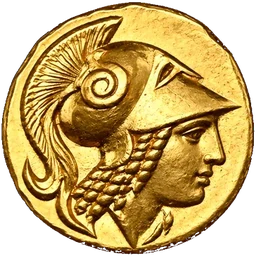
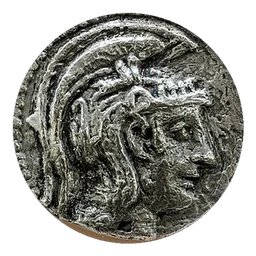
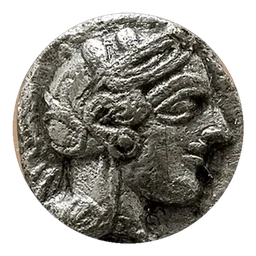
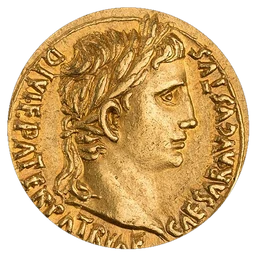
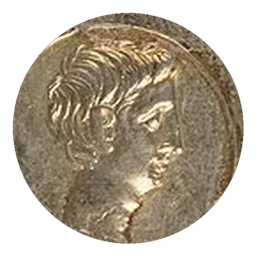
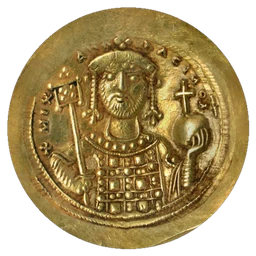
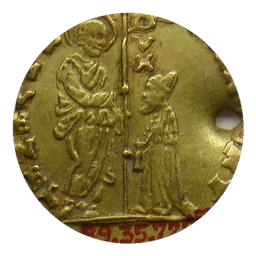
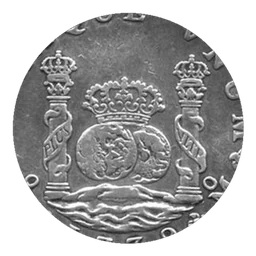
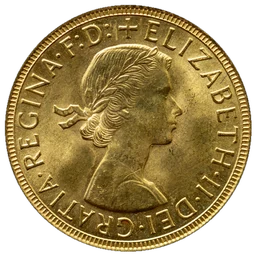
Shown to scale (actual relative sizes)
| Coin | Metal | Typ. weight | Purity | Metal value | |
|---|---|---|---|---|---|
| The first coins | |||||
| Lydian electrum (trite) Lydia, ~610 BC · The very first coins | Electrum | 4.7 g | ~54% | ~€311 |
| Aegina stater ('turtle') Greek, ~550 BC · The first Greek coinage | Silver | 12.2 g | 95% | €21.03 |
| Corinthian stater (Pegasus) Greek, 5th c. BC · Pegasus & Athena | Silver | 8.6 g | 95% | €14.83 |
| Ancient Greek coins | |||||
| Gold stater (Philip II / Alexander) Greek, 4th c. BC · Macedonian gold, nearly pure | Gold | 8.6 g | 98% | €1,019 |
| Silver tetradrachm (Athenian 'owl') Greek, 5th c. BC · The iconic four-drachma coin | Silver | 17.2 g | 98% | €30.59 |
| Silver drachma (Attic) Greek, 5th c. BC · Everyday high-value coin | Silver | 4.3 g | 97% | €7.57 |
| Roman coins | |||||
| Aureus (Augustus) Roman, ~15 BC · Early imperial gold | Gold | 7.8 g | 99% | €934 |
| Denarius (Augustus) Roman, ~15 BC · Early denarius, high silver content | Silver | 3.9 g | 98% | €6.94 |
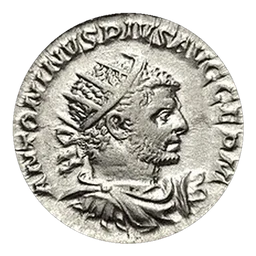
| Antoninianus (Caracalla) Roman, 215 AD · The 'double denarius', already only ~50% silver | Silver | 5.1 g | 50% | €4.63 |
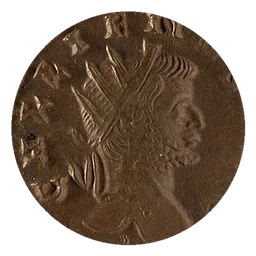
| Antoninianus (Gallienus) Roman, ~265 AD · Debasement's end: ~4% silver | Silver | 3.5 g | 4% | €0.25 |
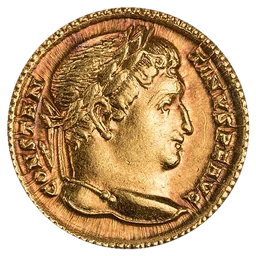
| Solidus (Constantine) Roman, 309 AD · The new, stable gold standard | Gold | 4.5 g | 99% | €539 |
| Byzantine coins | |||||
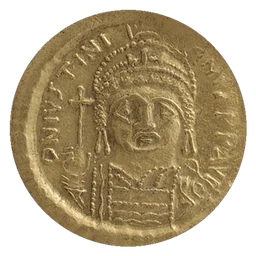
| Nomisma / solidus Byzantine, 6th–10th c. · Stable at ~4.5 g for nearly 700 years | Gold | 4.5 g | 97% | €528 |
| Debased nomisma Byzantine, ~1080s · The 11th-century gold collapse | Gold | 4.4 g | 25% | €133 |
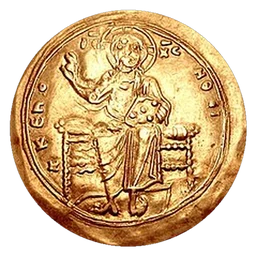
| Hyperpyron (Alexios I reform) Byzantine, 1092 · Post-reform, ~20.5 carats | Gold | 4.45 g | 85% | €458 |
| Trade coins | |||||
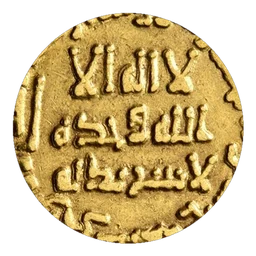
| Islamic gold dinar 7th–13th c. · Middle East, Mediterranean, Indian Ocean | Gold | 4.25 g | 97% | €499 |
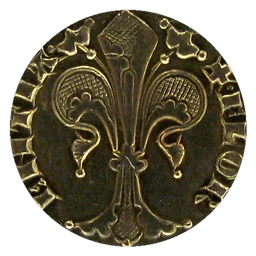
| Florentine florin 13th–15th c. · European international trade | Gold | 3.5 g | 99% | €419 |
| Venetian ducat / zecchino 13th–18th c. · Major Mediterranean/European trade coin | Gold | 3.5 g | 100% | €422 |
| Spanish 8 reales / peso 16th–19th c. · First truly global silver trade coin | Silver | 27 g | 93% | €45.57 |
| Modern coins | |||||
| Gold sovereign (modern) since 1817 · The familiar benchmark — see its price | Gold | 7.99 g | 92% | €886 |
Calculation: typical weight × fineness × the current price per gram. Today: gold €120.96/g, silver €1.81/g — last updated: 2026/09/26 21:00. Weights and finenesses are indicative; real coins vary by mint, ruler and wear. Electrum values are approximate — the natural gold–silver alloy varied (roughly 45–55% gold).
Where coins began
The first true coins were struck in Lydia (western Asia Minor) around 600 BC, from electrum — a natural gold-silver alloy — and the idea spread quickly to the neighbouring Greek cities of Ionia. The first pure gold coins followed under King Croesus of Lydia, around 550 BC.
For centuries most Greek city-states coined in silver and struck gold only in emergencies — Athens, for instance, minted gold in 407 BC by melting down temple treasures to help pay for the Peloponnesian War. Regular, standardized gold coinage arrived with Macedon: Philip II funded it from the gold mines of Mount Pangaion, and Alexander the Great spread his gold staters across the known world, bankrolled by the captured Persian treasuries.
Silver debasement in Rome
The Roman denarius began as almost pure silver. Over two and a half centuries, emperors steadily cut its silver content to cover the costs of the state: from ~98% under Augustus, to ~50% when Caracalla introduced the antoninianus (215 AD), and just ~4% by the time of Gallienus (~265 AD). It is, in essence, inflation in metallic form — nearly 1,800 years before the word itself was coined.
The solidus: the 'dollar' of the Middle Ages
The gold solidus established by Constantine the Great (309 AD) held its weight and purity — about 4.5 g of nearly pure gold — for close to 700 years, something unique in monetary history. Its stability collapsed only in the 11th century, when the Byzantine coinage was dramatically debased. The reform of Alexios I Komnenos in 1092 partly restored its value with the new hyperpyron (~20.5 carats).
From gold to faith
For most of history a coin was worth the metal in it, and even paper money was a promise — redeemable for a fixed weight of gold. That link was broken in the twentieth century: when the Bretton Woods system ended in 1971, the world moved to fiat money — currency backed not by any metal, but by faith in the government that issues it and the expectation that others will accept it in payment.
In the twenty-first century even that idea is being tested. Bitcoin and other cryptocurrencies have no metal, no government and no central issuer behind them; their value rests entirely on the shared belief that someone else will want them. In a sense the whole story is on this page: from the intrinsic gold and silver of the coins above, to money backed by institutions, to money backed by nothing but collective faith.
Related
Gold price · Gold sovereign · Silver price
Coin images: Lydian electrum & Caracalla antoninianus © Classical Numismatic Group (CC BY-SA); tetradrachm, drachma, Aegina & Corinthian staters © ArchaiOptix (CC BY-SA 4.0); florin © Francesco Bini (CC BY-SA 4.0); Alexios hyperpyron (CC BY-SA 2.5); aureus & solidi © American Numismatic Society, denarius, Justinian nomisma & Venetian ducat © The Met (CC0); debased nomisma (Dumbarton Oaks), Islamic dinar, Spanish 8 reales & sovereign, public domain; gold stater © Ec.Holdings.